
Languages
Python, TypeScript, JavaScript, Go
AI safety research and agentic systems
Software engineer working on agentic systems, LLM tooling, and backend-heavy AI products
I work on mechanistic interpretability, evaluation robustness, and agentic LLM infrastructure. My research focuses on understanding model internals, auditing safety behavior under post-training, and building reliable tool-calling systems.
Capabilities
Python, TypeScript, JavaScript, Go
PyTorch, Transformers, Hugging Face, LoRA/QLoRA, Gemini, evaluation harnesses and loops
Mechanistic interpretability, activation analysis, steering vectors, RLHF, red-teaming, safety evaluations
Django, DRF, Channels, Celery, Django-Q, Node.js, NestJS, retries, failure handling
AWS, Docker, Terraform, Cloudflare, Linux, CI, observability tooling, production hardening, latency and cost tradeoffs
React, Vite, Next.js, Redux Toolkit, Tailwind CSS, shadcn/ui
Experience
Software/AI Engineer
Software Engineer
Software Engineer
Projects
Benchmark harness for testing LLM tool-calling under retries, stalls, timeouts, and failure-transfer scenarios instead of ideal-path demos.
Production agentic platform for chat, voice, and KYC workflows across Django services, async workers, retrieval and tool execution, and React delivery.
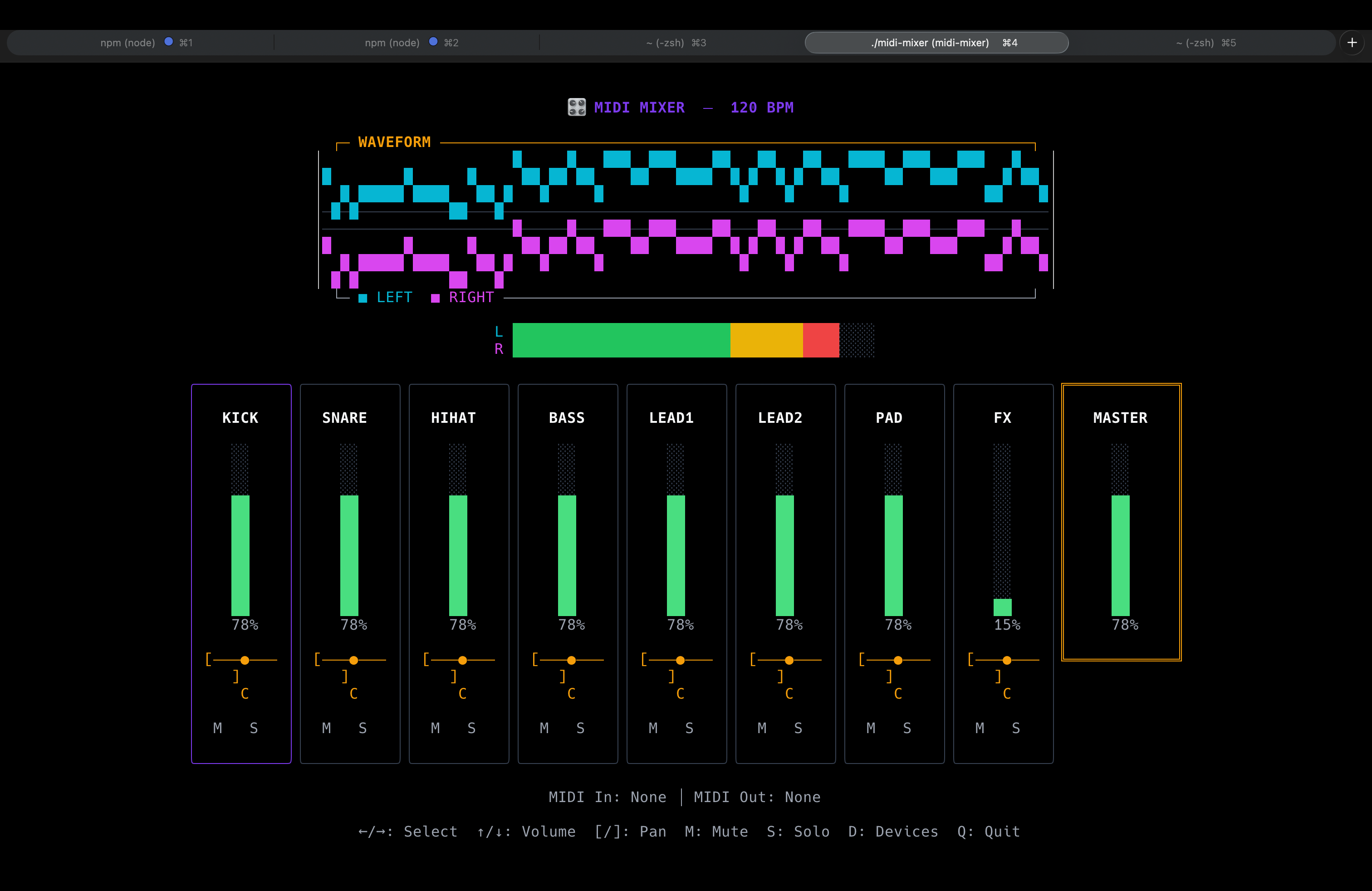
A terminal-based MIDI mixer built in Go. Keyboard-driven workflow for mixing and routing—built as a focused developer tool.
Multilingual grounded QA pipeline focused on citation-aware answering and abstention, with artifact-backed evaluation instead of demo-first output.
Research and Writing
Disentangled safety-refusal and epistemic-abstention directions via difference-in-means extraction and cross-ablation across Llama-3.1-8B, Qwen3-8B, and Gemma-2-9B. Near-zero mean cosine similarity (0.049) supports mechanistic independence rather than a shared direction.
Reproducible audit of whether verifiable-reward post-training changes safety-relevant behavior or changes the way safety evaluations measure it. Followed the Tülu 3.1 8B DPO-to-GRPO lineage across 12 checkpoints, evaluating 24 instrumental-convergence scenarios under four wordings and all six answer orders for 6,912 structured responses. Results supported measurement drift rather than persistent safety drift.
Python toolkit that monitors how safety-relevant concept directions evolve inside LLM activation space during fine-tuning. Uses difference-in-means extraction to locate refusal, sycophancy, and deception directions, then tracks geometric drift (cosine similarity, AUROC, cross-concept entanglement) via a HuggingFace Trainer callback. Key finding: refusal is consistently the most fragile concept, dropping to ~0.35 cosine within 50 steps of benign fine-tuning.
Comparison of Inoculation Prompting (IP) and Counterfactual Reflection Training (CRT) for sycophancy in Qwen3-8B. IP behaved like a gate (easily re-elicited, 98.8% after re-elicitation); CRT behaved like a broader rewrite (harder to restore but overcorrected to 54.3% contrarianism). Phase 4 mechanistic tests found steering could reopen behavior in IP but not CRT, while activation patching was null.
Comparison of Inoculation Prompting (IP) and Counterfactual Reflection Training (CRT) for sycophancy in Qwen3-8B, with behavioral and mechanistic (steering, patching) analysis. IP behaved like a gate (easily re-elicited); CRT behaved like a broader rewrite (harder to restore but overcorrected).
Companion codeCase study on why AI coding agents need eval-first engineering and how coding agents should code agents.
Public writeup on wording confounds in contrastive activation extraction across 6 traits and 2 open-weight models. Companion to the Deconfounding Contrastive Interpretability project.
Companion codePublic writeup on mechanism-specific limits of introspective tamper detection in Qwen3-8B. Companion to the Neuron Suppression Awareness project.
Companion codeJournal
More of such stuff/takes actively shared on my Twitter.
the best design patterns explanations, the visual elements nailed it and that cheatsheet is on point.
Open linkfeedback loops over rigid plans. keep evolving :)
Open linkthis got me out of tutorial hell and into shipping early on in 2021.
Open linkit was a tossup between this and that DSA playlist, but this one means a whole lot more to me.
Open link3b1b for software engineers.
Open linkneat explanations to actually understand branching, rebasing, and merge flow.
Open linkContact
For collaboration, technical discussion, or product ideas, email is the best channel.
Email: aaliyan1230@gmail.com
"Make it work. Make it right. Make it fast. In that order."